
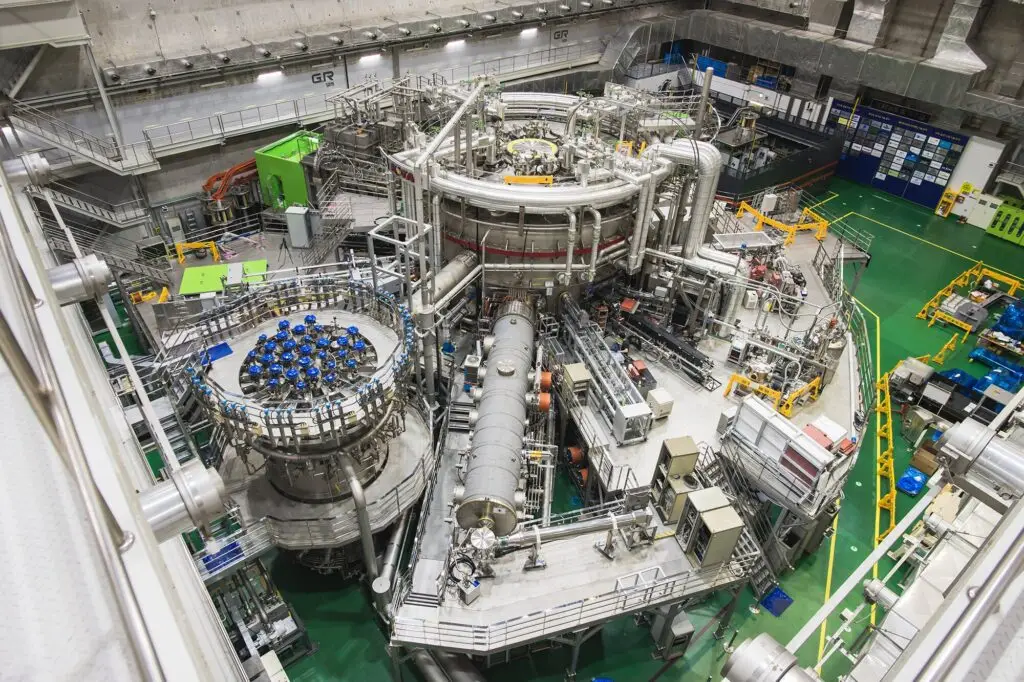
South Korean scientists have set a new world record using the Korea Superconducting Tokamak Advanced Research (KSTAR) device, an “artificial Sun” nuclear fusion reactor. According to CNN, The team generated plasma temperatures of 100 million degrees Celsius for 48 seconds during tests between December 2023 and February 2024. This temperature is seven times that of the Sun’s core, which is 15 million degrees Celsius.
What is nuclear fusion?
It is also significant that the KSTAR maintained the high confinement mode (H-mode) for over 100 seconds. H-mode is a stable plasma state. Fusion is the reaction that makes the sun and other stars shine. It involves fusing hydrogen and other light elements to release massive power that experts in the field hope to harness for unlimited, zero-carbon electricity.
Increasing the time spent at that temperature was tricky due to “the unstable nature of the high-temperature plasma,” making the new record a significant step, Mr Yoon told CNN. He added that scientists will now aim to sustain plasma temperatures of 100 million degrees Celsius for 300 seconds by 2026.
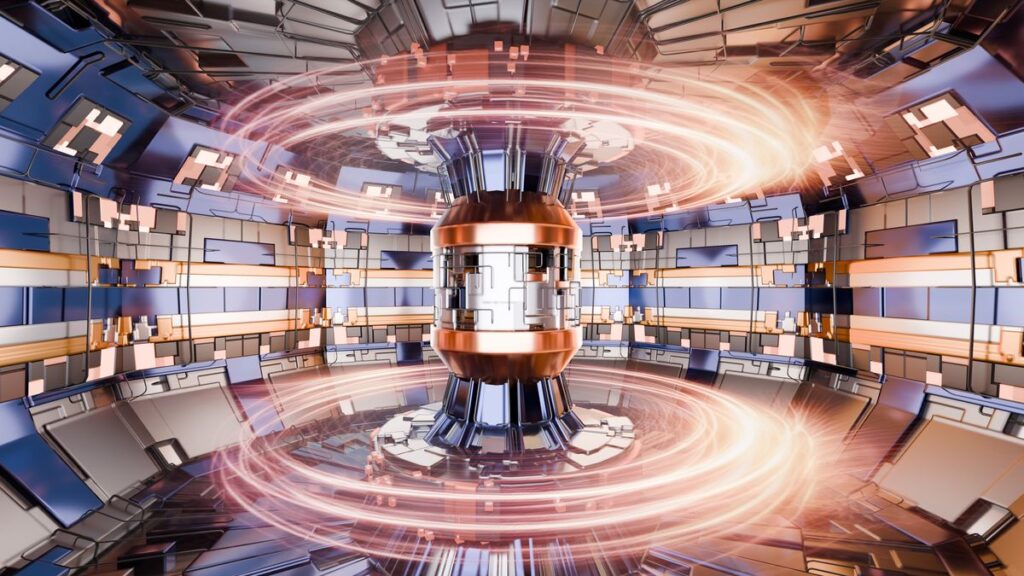
The most common way of achieving fusion energy involves a doughnut-shaped reactor called a tokamak in which hydrogen variants are heated to extraordinarily high temperatures to create plasma. High temperature and high-density plasmas, in whichreactions can occur for long durations,are vital for the future of nuclear fusion reactors.
What is tokamak?
Scientists generally use a donut-shaped reactor called a tokamak in which hydrogen variants are heated to extraordinarily high temperatures to create a plasma. High temperatures and high-density plasmas are vital for the future of nuclear fusion reactors. This is called the artificial Sun because it replicates the reaction of fusion taking place there and unleashes a massive amount of heat energy.
The KFE scientists said they managed to extend the time by tweaking the process, including using tungsten instead of carbon in the “diverters,” which extract heat and impurities produced by the fusion reaction.
The latest record “will be of great help to secure the predicted performance in ITER operation in time and to advance the commercialization of fusion energy,” Mr Yoon said.The latest record “will be of great help to secure the predicted performance in ITER operation in time and to advance the commercialization of fusion energy,” Mr Yoon said.