
Scientists in Brazil have announced the discovery of one of the world’s oldest fossils believed to belong to an ancient reptile dating back some 237 million years that could help explain the rise of the dinosaurs.
Named Gondwanax paraisensis, the four-legged reptile species was roughly the size of a small dog with a long tail, or about one metre (39 inches) long and weighing between three and six kilograms (seven to 13 pounds), the scientists said in a statement on Monday.
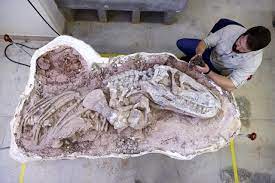
Researchers have finally found the first species from Brazil’s oldest unequivocal dinosaur-bearing beds.
Whether or not they are dinosaurs remains a subject of debate, but the authors of the new study believe that this fossil and studying silesaurs can give the field new insights into the evolution of dinosaurs, and not just any dinosaurs, “the bird-line archosaurs.”
The Gondwanax paraisensi
In 2015, paleontologist Rodrigo Temp Muller found the Gondwanax paraisensi in the town of Paraiso do Sul in the south of Brazil on a rock that dates to the Triassic era. Different animals, such as dinosaurs and mammals, emerged at that time, as Reuters reports. But it wasn’t until 2021 that the research kicked off.
A new study just published in Gondwana Research, referring to the supercontinent that existed before the great separation into the continents we live on today, confirms one of the oldest dinosauromorphs has been identified. Specifically, it’s the earliest “silesaurid.” And it had some remarkable anatomical features that might reveal new insights into this unprecedented and unreachable moment in the history of evolution.
“The unique combination of sacral and hindlimb features may suggest distinct behaviors for these species, potentially leading to niche differentiation within the same ecosystems.”
Evidence suggests that “the precursors to the dinosaurs and pterosaurs were much more diverse than previously imagined.” Pterosaurs are flying reptiles, essentially. They evolvedto be able to fly. And this species seems to provide insights, specifically, into the evolution of bird-line archosaurs, as this group encompasses both reptiles and birds.